Your soffit and fascia do more than just complete the look of your roof—they protect your home from moisture, pests, and structural damage. But when wood rot sets in, these areas can quickly deteriorate, leading to major problems down the line.
If you’ve noticed soft spots, peeling paint, or sagging sections near your roofline, don’t wait. This guide will walk you through how to DIY repair soffit and fascia rot and help prevent it from coming back.
🔍 What Causes Soffit and Fascia Rot?
Soffits (the horizontal underside of your roof overhang) and fascia (the vertical board behind the gutter) are constantly exposed to the elements. Poor drainage, clogged gutters, or roof leaks are the main causes of water getting trapped, leading to fungal growth and wood rot.
⚠️ Signs of Rotted Soffit or Fascia
- Cracking, peeling, or blistering paint
- Soft or sagging sections near roof edges
- Water stains or discoloration
- Evidence of birds, squirrels, or insects getting inside
- Mold or mildew on the underside of roof eaves
🧰 Tools and Materials You’ll Need
- Pry bar or hammer
- Circular saw or multi-tool
- Replacement lumber (treated or PVC boards)
- Exterior wood screws or nails
- Wood filler or epoxy (optional for minor fixes)
- Caulk (paintable exterior-grade)
- Paint or stain
- Safety gear (gloves, goggles, ladder)
🛠 Step-by-Step: How to Repair Soffit and Fascia Wood Rot
Step 1: Inspect the Damage
Check all roof edges and under-eaves. Use a screwdriver or awl to test for soft or spongy spots. Note how far the rot has spread—you may need to remove entire sections.
Step 2: Remove the Rotted Material
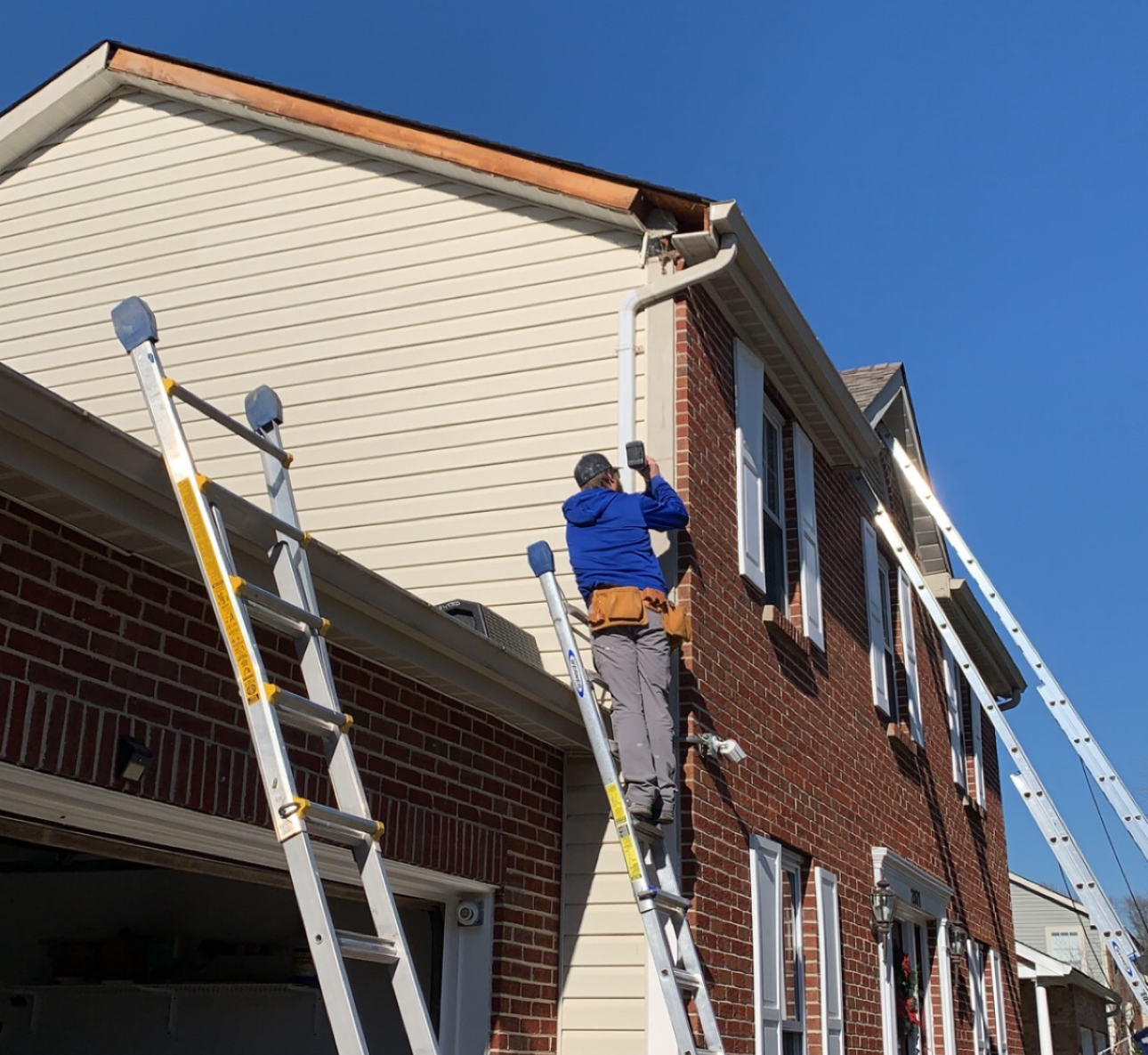
Using a pry bar or drill, carefully remove damaged fascia boards and soffit panels. Be gentle around the roofline and gutters to avoid further damage.
Step 3: Check the Rafters and Framing
Once the boards are off, inspect the framing behind them. If any framing is rotted, it must be replaced or reinforced before moving forward.
Step 4: Cut and Install New Boards
Cut your replacement soffit and fascia pieces to size. Use treated lumber, cedar, or rot-resistant PVC. Install the new boards using deck screws or galvanized nails for durability.
Step 5: Seal, Caulk, and Paint
Apply paintable exterior caulk around all seams and joints to block moisture. Prime and paint your new boards to match the rest of the trim and seal them against future water intrusion.
💡 Pro Tips to Prevent Soffit & Fascia Rot
- Keep gutters clean and water flowing away from the roofline
- Install proper roof ventilation to reduce trapped moisture
- Use high-quality paint or sealer
- Trim tree branches to prevent moisture buildup and critter access
- Inspect your soffit and fascia every spring and fall
🛑 When to Call a Pro
If rot has reached your roof framing or if your ladder skills aren’t top-notch, consider calling a professional. High-up repairs can be dangerous and complex, especially when dealing with gutter systems or roofing.
Final Thoughts
Fixing rotted soffit and fascia yourself is a smart, cost-effective project if caught early. By replacing bad boards and sealing them properly, you can prevent expensive repairs and extend the life of your home’s exterior.
Have some questions?
Even though we are a Greater Cincinnati based company, don’t hesitate to reach out if you live outside of the area. We would love to help you out. Just visit our Contact Us Page.